Personalized wine label with photo and text
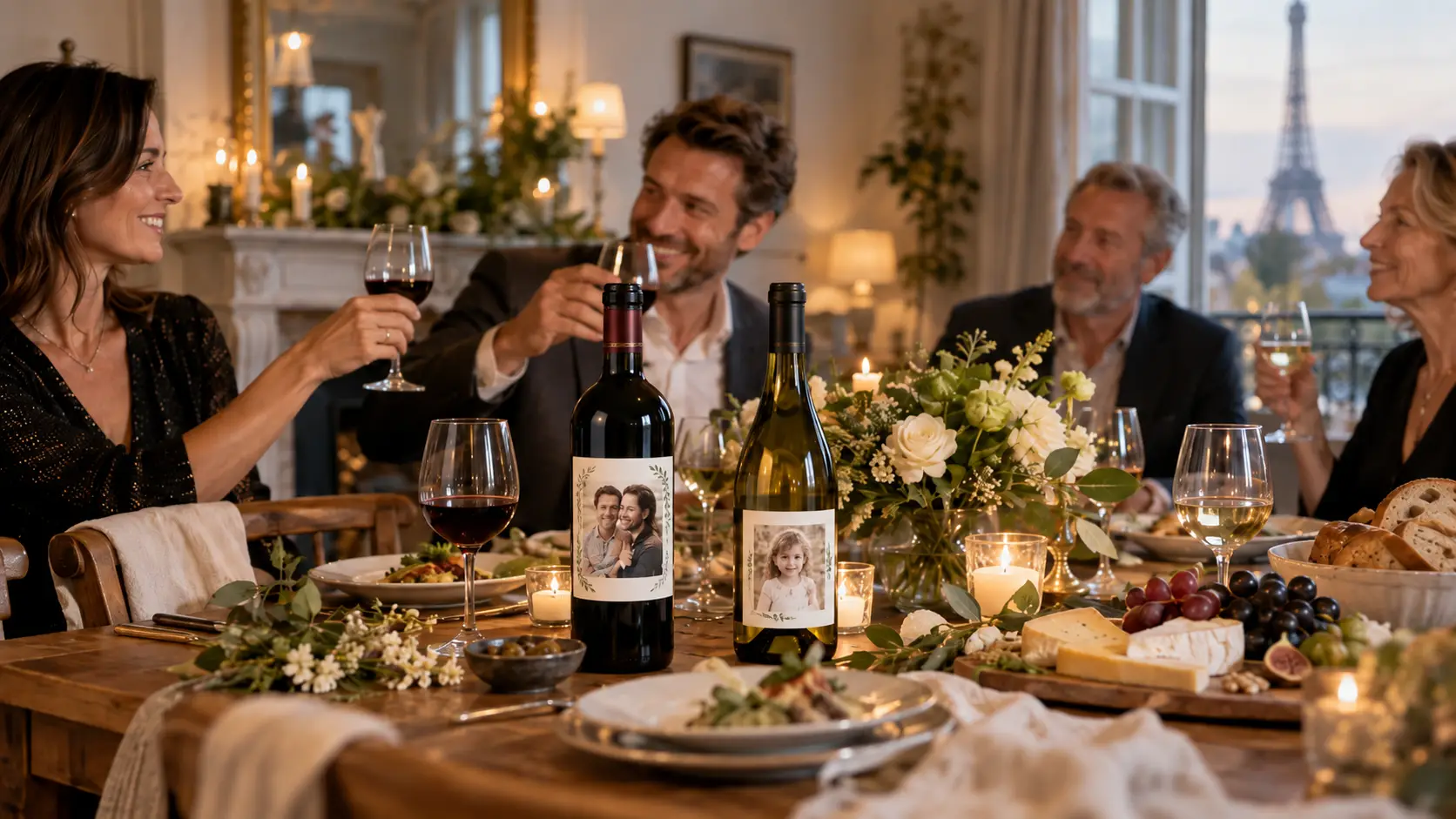
A personalized wine label with a photo transforms a bottle into a gift or party decoration. The result depends on the printed content, image quality, format, material, and careful application.
What should you put on a wine photo label?
A photo alone is not always enough to tell the story of the occasion. Combining a photo and text gives the bottle meaning: a name, a date or a message puts the memory into context. The content therefore depends on the event, but also on the nature of the bottle, whether it is given as a gift or sold.
Customize the photo and message for the occasion
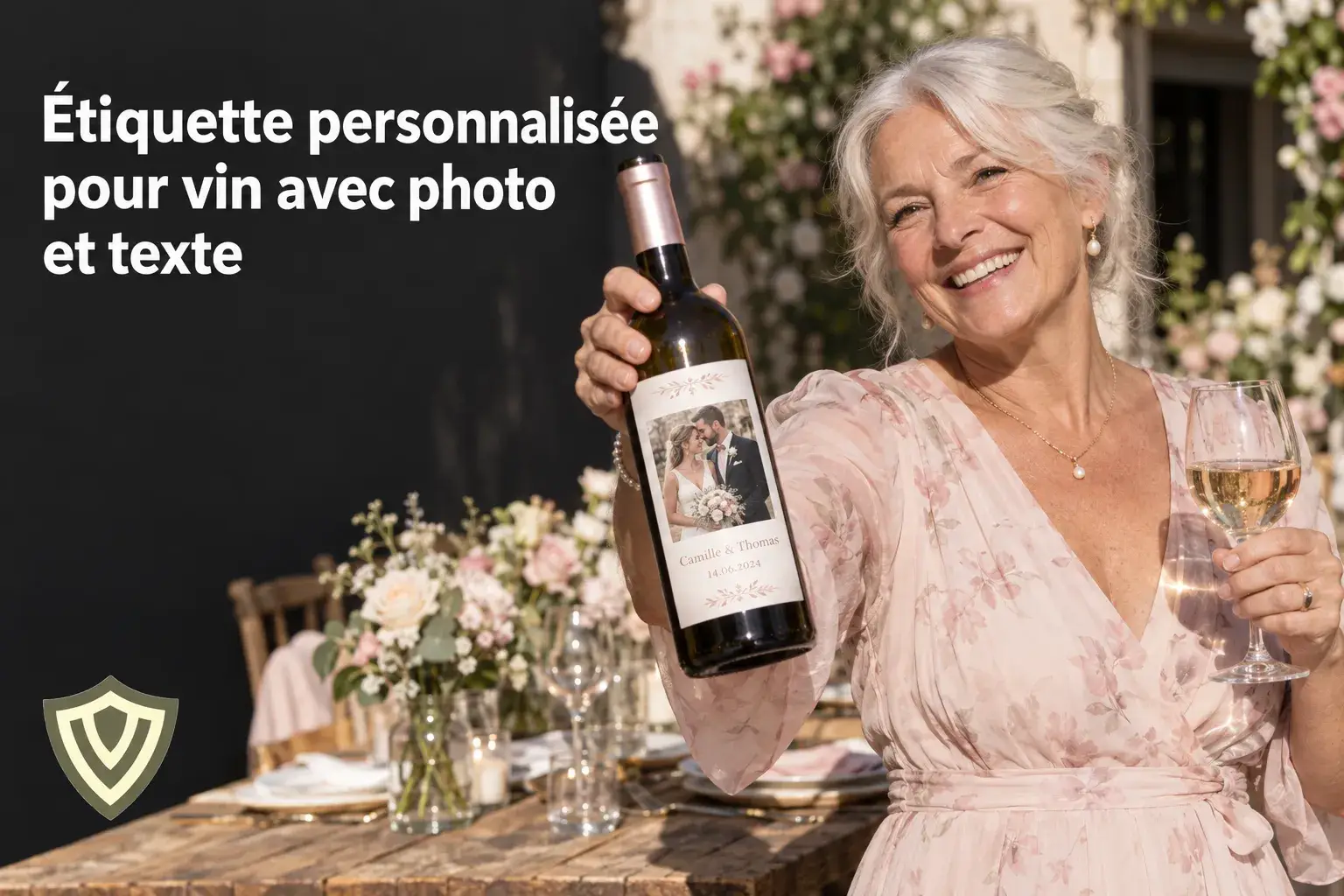
For a wedding, a photo of the bride and groom is often paired with their first names or initials, along with the date of the reception. The personalized bottle can then be used as a table decoration or guest favor. A birthday, birth or christening follows the same idea: a photo, a first name, a date or a short message.
Votre Étiquette offers, for example, a black-and-white photo label for Mother's Day, customizable with a message and first names. Other projects move away from family keepsakes to highlight the wine itself:
- The cuvée name : it gives a series of bottles its identity.
- The vintage It must correspond to the actual harvest year.
- Bottle number It enhances a limited edition.
- Lifestyle photo domain, harvest or team, in addition to the text.
On a personalized label for a special vintage, this information about the wine must remain accurate. The design can be flexible, but the wine information cannot.
Preserve the required information on wine
A decorative label applied to a gifted bottle must not obscure any mandatory information. Conversely, if the design replaces the label of a wine sold commercially, it must include the applicable regulatory information. The DGCCRF notably lists the designation, alcohol content, origin, nominal volume, bottler, batch number and allergens.
Since 8 December 2023, the list of ingredients and the nutritional declaration apply to the wines concerned, according to the European Commission. This information may be provided via a QR code, but the energy value and allergens must remain on the physical label. For champagne or another sparkling wine, the DGCCRF also requires the sugar content, and the Comité Champagne reminds producers to include the designation, dosage and producer.
How do I prepare a sharp photo and text?
Sharpness is determined before printing: from the design stage onward, the file quality, framing, and text readability determine the final result. The next step is to check whether the photo can be used.
Choose and crop the photo file
For a sharp print, aim for 300 ppi at the final size, unless the printer specifies otherwise. PPI measures the number of pixels per printed inch. A photo measuring 90 × 120 mm therefore requires approximately 1,063 × 1,417 pixels: this is a preparation calculation, not a regulatory requirement.
Below 150 dpi, blurriness may become visible on the printed label. The source of the file therefore matters just as much as its dimensions:
- Original file It retains the full definition of the shot.
- Screenshot its resolution is limited to that of the screen.
- Image of a social network it is often compressed when sent.
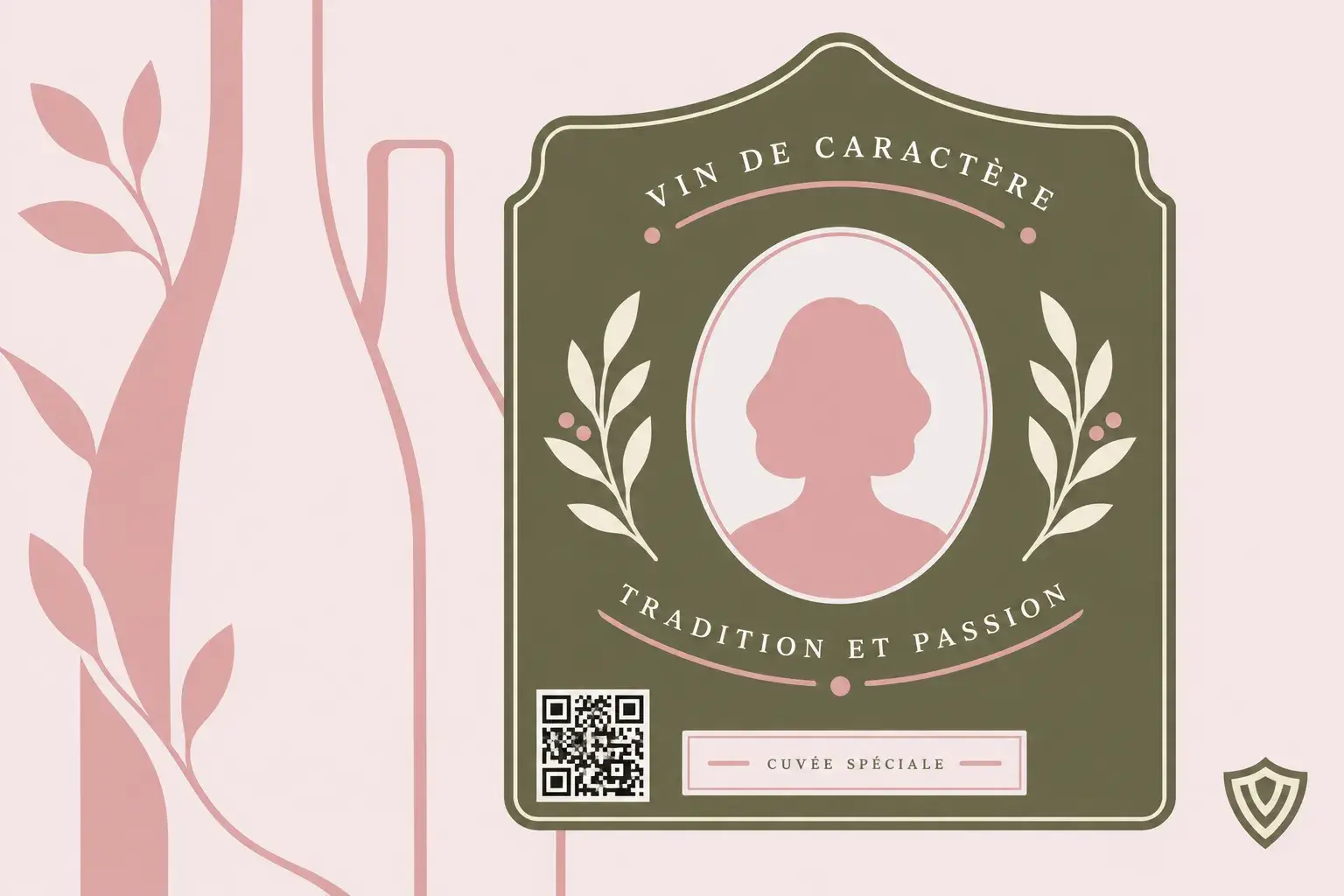
Once you have the right file, the crop should follow the chosen shape. For a portrait or group photo, make sure the crop does not cut off any faces and that everyone remains clearly visible.
Create the design in the online editor
Votre Étiquette's online editor lets you start from a blank page or choose from over 500 templates. Every change is displayed in an instant preview, avoiding any unpleasant surprises when placing your order.
The photo can be combined with text whose font and colour can be customised. In practice, contrast requires careful attention: text placed over a highly detailed or very light area of the image quickly becomes difficult to read.
Check image usage rights
An image found online is not automatically free to reuse. Article L.122-4 of the French Intellectual Property Code generally prohibits reproducing a photograph without the permission of its author or rights holders.
Image rights are an additional consideration in this initial review. According to Service-Public, using the image of a recognizable person generally requires their written permission. For a minor, parental consent is required.
Which format should you choose for your wine bottle?
No single size fits all bottles. The right format is determined by the actual bottle, then by the desired shape and existing templates for a photo.
Measure the actual available surface area
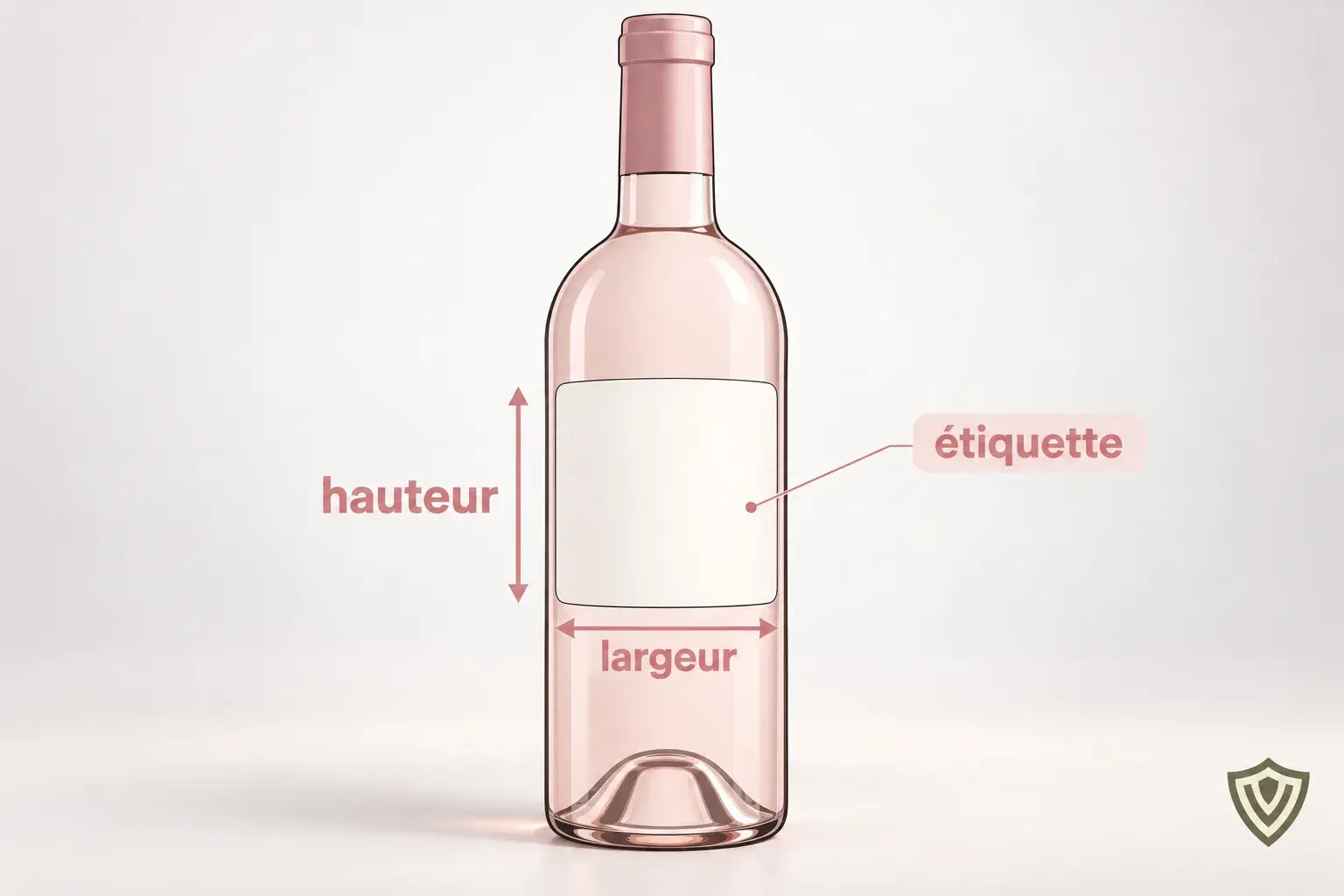
A 75 cl capacity does not determine the label dimensions: height, available width and curvature vary from one bottle to another. Measure the clear area of the body, between the shoulders and any existing labels.
A rectangle of paper cut to the intended dimensions is then used as a test. Placed against the bottle, it directly shows the curvature and margins before ordering.
Choose the size and shape
There is no single standard size for a personalized decorative label. The differences are clearly visible on a champagne bottle: a neck label starts at 30 × 50 mm.
A body label can be up to 90 × 120 mm, or even larger depending on the bottle. These are the measurements taken on paper that determine the final size.
Next comes the shape: rectangle, rounded rectangle, oval, circle or custom shape. An oval or circle frames a portrait well, as long as the framing keeps the faces fully visible.
View the available formats for a photo
Among photo bottle labels, Votre Étiquette offers a birthday design as a self-adhesive label in a 75 × 100 mm format. A champagne design measures 100 × 76 mm, with a central portrait, a message, and editable contrasting patterns.
A neck label or back label can complement the main photo label. Votre Étiquette also offers custom die-cutting to adapt the dimensions and shape to the bottle.
Which self-adhesive material is resistant to cold?
A wine bottle often goes from the refrigerator to an ice bucket. The performance of a self-adhesive label then depends on two elements: the printed face stock, meaning the visible material, and the adhesive that secures it to the glass.
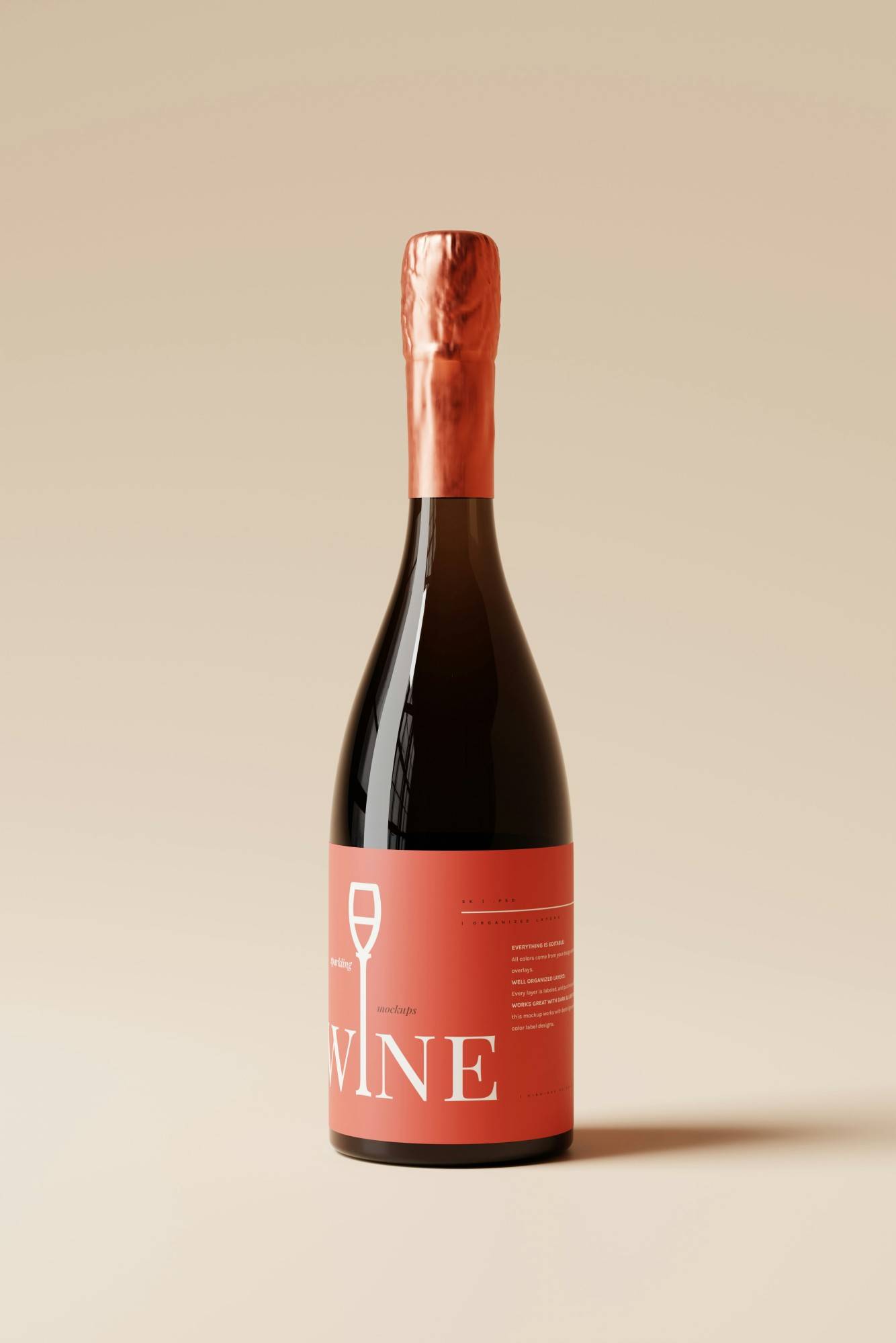
Compare paper, films and transparent finishes
Paper offers a matte, coated or textured feel, but ordinary paper absorbs more moisture. Some treated, varnished or laminated papers hold up better. Polypropylene, a water-resistant film, is available in matte white for wine labels, as are certain vinyl versions advertised as waterproof.
A transparent film gives the impression of a design printed directly on the glass. However, without a white backing layer—a white layer printed beneath the image—the colours in a photo lose visibility.
Choose the adhesive according to how the bottle will be used
For a bottle that stays dry at room temperature, a permanent adhesive designed for glass may be suitable. A refrigerated bottle requires checking the stated resistance to cold and moisture. For an ice bucket, the difference lies in the chosen material and its adhesive: a waterproof film, paper or vinyl alone does not guarantee durability.
The published tests concern specific assemblies. One adhesive manufacturer states up to 8 hours of immersion for a formulation designed for cold, damp conditions, and 2 hours for other solutions. One paper manufacturer describes a test of at least 4 hours for an assembly applied to glass.
Plan for removal after the event
The type of sticker also matters after the party. An adhesive that is repositionable during application may become permanent afterwards.
This initial flexibility therefore does not guarantee residue-free removal over time. Only a truly removable adhesive is designed to peel off cleanly.
If the bottles need to regain their original appearance, please specify this requirement before placing your order. The adhesive is then selected at the same time as the material.
How do I order and apply photo labels?
Once your design is ready, two steps remain: carefully confirm your order, then apply the label to a properly prepared glass.
Confirm creation and quantity
Votre Étiquette prints personalized labels in France on adhesive materials from just 1 copy, with desktop publishing assistance for the design. Elsewhere, some offers are sold in packs of 6 or require a minimum of 25 copies. Before approving the print proof, check every detail:
- Names and dates spelling and accuracy of every character.
- Cropping, dimensions and colours : matching the preview and the measured bottle.
- Legal Notices : present when the wine is marketed.
Finally, the quantity ordered must match the number of bottles to be personalized.
Prepare the glass before application
Remove the original label if necessary, keeping the mandatory information on the bottle visible. The glass must then be clean, degreased and dust-free: a lint-free cloth moistened with household alcohol is suitable.
Next, dry the bottle completely. If the bottle has just come out of the refrigerator, wait until the condensation has disappeared before applying the label.
Apply the label without bubbles
First position the label against the bottle, with the protective backing still in place, to check the height, alignment, centering and photo orientation. Then remove the backing and apply the label from the center outwards, pressing gradually. It is best to get it right the first time: repeatedly removing a permanent adhesive label can damage the surface and leave residue.